TL;DR

Get self-care favorites delivered free with Prime
- Fast, free delivery on millions of items
- Prime Video, Amazon Music and more included
- Member-only deals all year
Glamour UK has published a 2026 guide to nine hyaluronic acid serums, combining product testing with advice attributed to skin-care experts. The source explains that these serums are intended to hydrate, not exfoliate, and recommends applying them to damp skin before moisturizer.
Glamour UK has published a 2026 guide to nine hyaluronic acid serums, presenting product recommendations alongside advice on how to select and use the ingredient. The article describes its selections as tested with experts, but the supplied source material does not identify all nine products or provide a complete testing methodology.
The guide’s product notes praise one serum from a brand’s Rx line for pairing hyaluronic acid with glycerin, ceramide NP and vitamin E. The writer says it absorbs quickly, layers with skin care and makeup, and leaves skin feeling hydrated. Those are reported testing impressions, not a clinical comparison of the product with other serums.
Wu, quoted in the supplied article, says she reaches for the serum when her skin feels dry, particularly in winter or after retinoid use. She describes it as fast-absorbing and hydrating without feeling heavy. The source does not provide Wu’s full name or further details about the duration or conditions of the test.
The guide characterizes hyaluronic acid as a humectant that attracts and holds water, supporting skin hydration. It distinguishes the ingredient from exfoliating acids such as glycolic, lactic and salicylic acid: hyaluronic acid is not presented as a treatment for removing dead skin cells, blemishes or dark spots.
What the Serum Guide Offers Shoppers
The guide is useful to readers comparing hydration products because it pairs a list of recommendations with practical criteria: a serum’s supporting ingredients, texture and compatibility with the rest of a routine. It also cautions, in effect, against treating all products containing hyaluronic acid as interchangeable; the overall formula matters, especially for people with sensitive, oily or acne-prone skin.
Its advice may help set expectations. Hyaluronic acid is described as a moisturizing ingredient, not an exfoliant or a standalone solution for every skin concern. Readers should also distinguish editorial product impressions from independent clinical evidence: the supplied material does not report controlled testing or quantify results across the nine selections.
hyaluronic acid face serum with glycerin and ceramides
As an affiliate, we earn on qualifying purchases.
As an affiliate, we earn on qualifying purchases.
How the Guide Frames Hyaluronic Acid
The source says the hyaluronic acid used in skin-care products is a synthetic version of a substance naturally found in skin. It describes the ingredient as gentle and explains that formulas may combine it with other hydrators or supportive ingredients, including glycerin, ceramides, vitamin B5, beta-glucan or sodium PCA. The article gives a suggested concentration range of 0.5% to 1%, with 2% as its stated maximum recommendation; these figures are guidance from the source, not a universal rule independently verified here.
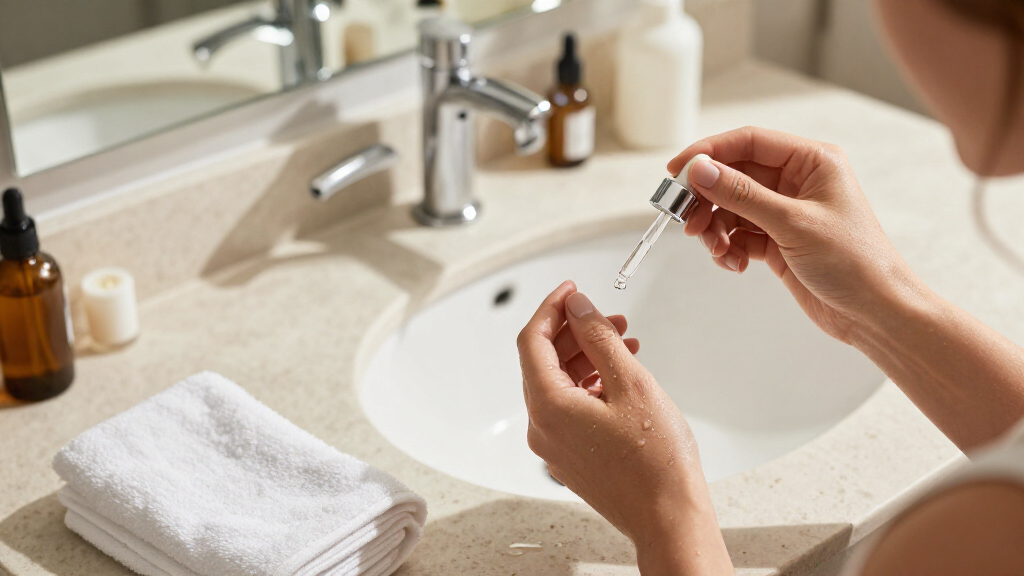
Application advice is a central part of the piece. It recommends smoothing serum onto slightly damp skin after cleansing or showering, then applying moisturizer to help retain hydration. The article warns that applying it to dry skin in a dry environment may not produce the desired effect, citing aesthetic doctor Sophie Shotter’s explanation that the ingredient can draw moisture from the skin’s deeper layers when there is little humidity.
The guide also says hyaluronic acid can be used alongside retinol and vitamin C. It recommends applying products from lighter to thicker consistency and says moisturizer and sunscreen should follow. These are general routine suggestions in the article; individual tolerance can vary, and the supplied material does not address every possible formulation or skin condition.
“When my skin is parched—especially during winter or post-retinoid use—I reach for this.”
— Wu, as quoted in the Glamour UK guide
fragrance-free hyaluronic acid serum for sensitive skin
As an affiliate, we earn on qualifying purchases.
As an affiliate, we earn on qualifying purchases.
Testing Details and Product List
The supplied source excerpt does not name all nine recommended serums, give their prices or explain how products were selected and tested. It is also unclear when the guide was published and whether its recommendations have been updated during 2026. The product praise and user experience described in the excerpt should be read as editorial assessment, not proof that a serum will work the same way for every reader.
The article discusses how to choose formulas but does not establish that one concentration or combination is best for all skin types. Results can depend on the complete product formula, the rest of a person’s routine and environmental conditions. The supplied material also ends before fully explaining the implications of different hyaluronic acid molecular weights.
hyaluronic acid serum with vitamin B5 for dry skin
As an affiliate, we earn on qualifying purchases.
As an affiliate, we earn on qualifying purchases.
Check the Full Guide Before Buying
Readers considering a purchase can consult the full Glamour UK article for the complete product list, current availability and any buying details not included in the supplied excerpt. Before adding a serum, they can compare its full ingredient list with their existing routine, apply it to damp skin as the guide advises, and follow with moisturizer. The source does not announce a follow-up test, new product release or further update date.
lightweight hyaluronic acid serum for layering under moisturizer and makeup
As an affiliate, we earn on qualifying purchases.
As an affiliate, we earn on qualifying purchases.
Key Questions
What is the news in Glamour UK’s 2026 guide?
Glamour UK published a guide recommending nine hyaluronic acid serums, with product commentary and advice attributed to skin-care experts. The provided source excerpt does not show the complete list.
What does hyaluronic acid do in a serum?
The guide describes it as a humectant that attracts and holds water to support skin hydration. It is not described as an exfoliating acid or a treatment for removing dead skin cells.
How does the guide recommend applying the serum?
Apply it to slightly damp skin after cleansing or showering, then use moisturizer. The article says this helps provide moisture and reduce the risk of applying the ingredient in a dry environment without enough water available.
Can hyaluronic acid be used with retinol or vitamin C?
The guide says hyaluronic acid can be paired with retinol and vitamin C, and describes it as potentially soothing alongside some more irritating ingredients. Product formulas and individual skin tolerance vary, so the article’s general advice is not a guarantee of compatibility for everyone.
Does the supplied source identify all nine serums?
No. The source material provided here includes commentary on one Rx-line serum but does not include the full nine-product list, complete prices or detailed testing methods.
Source: rss
Fall Picks
fall essentials
As an affiliate, we earn on qualifying purchases.