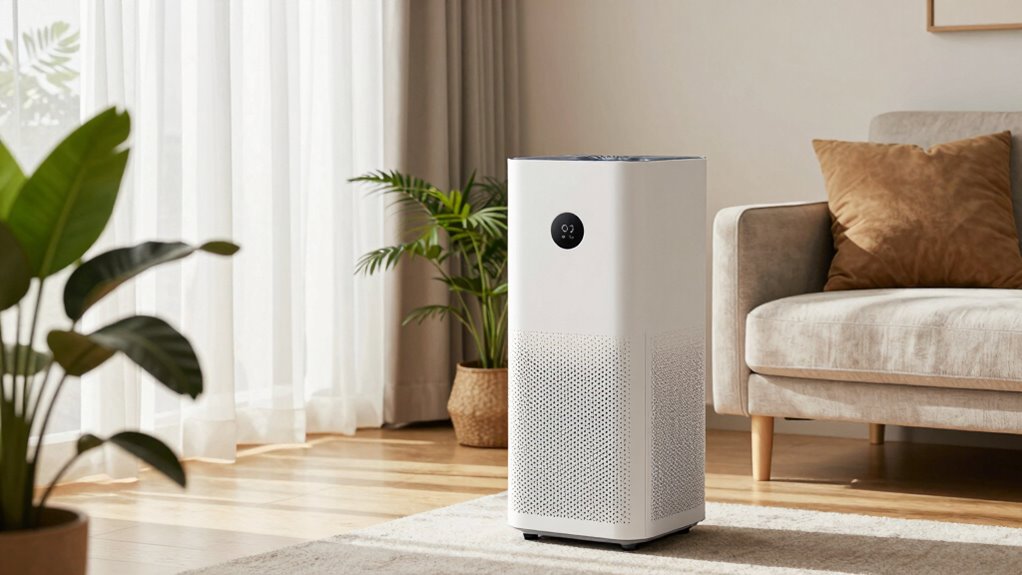

To choose an air purifier for home use, start by identifying your main concerns like dust, pet dander, smoke, or odors, and pick features like HEPA filters or activated carbon accordingly. Measure your room size to guarantee the purifier’s capacity fits, using CADR ratings to compare effectiveness. Consider maintenance costs, noise levels, and energy efficiency for long-term use. Pay attention to design and smart features that enhance convenience. Keep exploring for more tips to find the perfect match for your home.
Listen free for 30 days with Audible
Thousands of audiobooks and originals — cancel anytime.
As an affiliate, we earn on qualifying purchases.
Key Takeaways
- Identify specific pollutants you need to remove, like dust, pet dander, or odors, and choose filters accordingly.
- Match the purifier’s CADR rating to your room size for effective air cleaning.
- Consider filter maintenance, replacement costs, and ease of access for sustained performance.
- Check noise levels and energy efficiency to ensure suitability for your space and long-term use.
- Evaluate design, smart features, and additional functions to fit your home decor and convenience preferences.
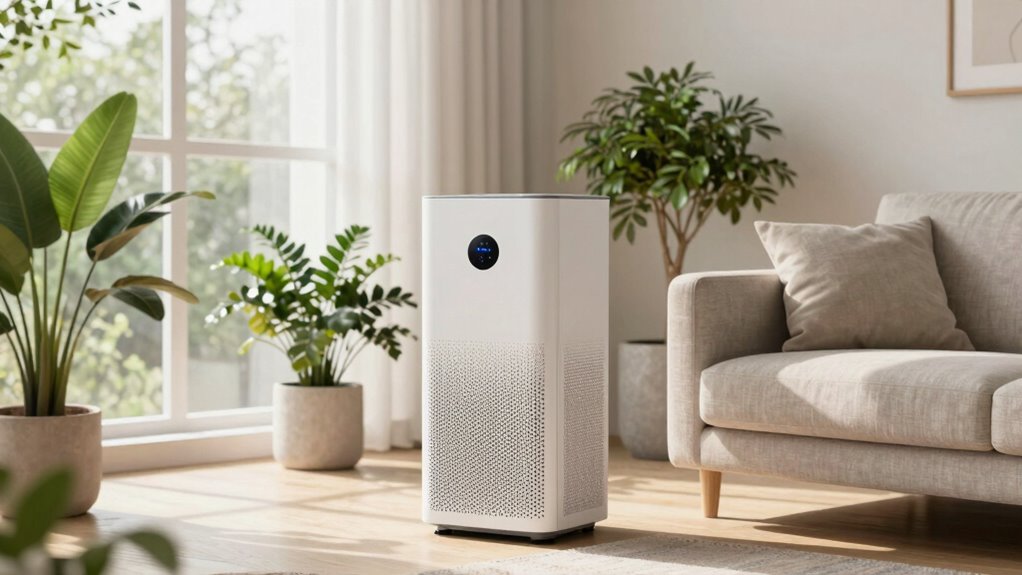
Are you overwhelmed by the many air purifiers available on the market? With so many options, it can feel intimidating to decide which one is right for your home. The key is to focus on your specific needs and understand some essential factors, starting with air quality. Think about what pollutants you want to remove—are you dealing with dust, pet dander, smoke, or allergens? Identifying your main concerns will help you choose an air purifier that effectively tackles those issues. For example, if you have allergies, look for models with HEPA filters that can trap tiny particles. If you’re concerned about smoke or odors, activated carbon filters will be beneficial.
Once you’ve pinpointed your needs, consider the size of the room where you plan to use the purifier. An air purifier that’s too small for your space won’t be effective, while one that’s too large might be unnecessary and wasteful. Measure your room and check the Clean Air Delivery Rate (CADR) ratings of different models. Higher CADR numbers indicate faster and more efficient air cleaning, which is especially important in larger rooms or spaces with high pollution levels. Understanding CADR ratings can help you make a more informed decision about the right model for your space. Additionally, selecting a purifier with the appropriate filter type will ensure it effectively targets your specific pollutants.
Filter maintenance is another essential aspect to think about. Some air purifiers require frequent filter replacements, which can add to the ongoing costs and effort. Look for models with straightforward filter replacement processes and check how often filters need to be changed. A device with easily accessible filters can save you time and hassle. Remember, the performance of your air purifier depends heavily on regular filter maintenance; neglecting it can reduce its effectiveness and compromise your air quality. Proper filter care and following manufacturer guidelines will ensure your unit continues to operate at peak performance. Regular maintenance routines will also extend the lifespan of your device. It’s also helpful to consider filter replacement costs when choosing a model, as these can vary significantly between brands. Incorporating quality assurance measures, such as checking for certifications, can further help ensure your purifier performs reliably over time.
In addition, consider the noise level of the air purifier, especially if you plan to use it in bedrooms or quiet spaces. Some models operate quietly, making them suitable for nighttime use, while others may be louder but more powerful. You should also think about energy consumption—choosing an energy-efficient model can help keep operating costs low over time.
Finally, look at the overall design and features. Some purifiers come with smart technology, allowing remote control or air quality sensors that automatically adjust operation. These features can enhance convenience and ensure your home’s air quality remains consistently high. By carefully evaluating your needs, room size, filter maintenance, and additional features, you’ll be able to select an air purifier that improves your air quality without unnecessary hassle.
As an affiliate, we earn on qualifying purchases.
Frequently Asked Questions
How Often Should I Replace the Air Purifier Filters?
You should replace your air purifier filters based on their filter lifespan, typically every 3 to 6 months, though this varies by model and usage. Keep an eye on replacement indicators, which often alert you when filters need changing. Regularly checking these signals guarantees your purifier works efficiently, maintaining clean air in your home. Remember, timely replacements help prevent reduced airflow and diminished filtration performance.
Are HEPA Filters Effective Against All Airborne Pollutants?
A stitch in time saves nine, and understanding HEPA filters‘ limitations proves crucial. HEPA filters are highly effective against most airborne particles like dust, pollen, and pet dander, but they don’t catch gases or chemicals. So, while they’re excellent for many airborne pollutants, remember their limitations, especially with volatile organic compounds. For thorough air quality, consider combining HEPA with activated carbon filters to cover all bases.
Can Air Purifiers Eliminate Odors Completely?
Air purifiers can substantially reduce odors, but they might not eliminate them completely, especially if the source persists. Look for models with odor absorption features, like activated carbon filters, to improve results. Keep in mind that filter longevity affects performance; replacing filters as recommended guarantees consistent odor removal. Regular maintenance helps your air purifier work effectively, so you’ll enjoy fresher air without lingering smells.
Do Air Purifiers Produce Ozone or Other Harmful Emissions?
Ozone concerns are valid—some air purifiers do produce ozone or harmful emissions if not carefully chosen. You need to be vigilant, because certain models emit dangerous levels of ozone that could harm your health. Look for units with emission safety certifications and avoid ionizers or ozone generators unless specifically designed to be ozone-free. By selecting the right purifier, you can guarantee clean air without risking exposure to harmful emissions.
How Noisy Are Different Air Purifier Models During Operation?
Different air purifier models vary in noise levels, so you’ll notice some are quieter than others. During operation, noise levels are measured in decibels, and a sound comparison shows that high-end models often operate at a whisper-quiet 20-30 dB, perfect for bedrooms, while others may be louder but still manageable. Check product specifications for noise levels to guarantee you find a model that suits your preference for quieter or more powerful operation.
activated carbon air purifier for odors
As an affiliate, we earn on qualifying purchases.
As an affiliate, we earn on qualifying purchases.
Conclusion
So, next time you’re searching for the perfect air purifier, remember that the right choice often comes down to your home’s unique needs. Coincidentally, I found myself picking one just as my neighbor did, and it turned out we both wanted cleaner air without sacrificing style. It’s funny how life’s little coincidences lead us to better choices. Trust your instincts, consider your space, and breathe easy knowing you’ve chosen wisely—because sometimes, the best decision is just a click away.
large room air purifier with high CADR
As an affiliate, we earn on qualifying purchases.
As an affiliate, we earn on qualifying purchases.
smart home air purifier with filter replacement indicator
As an affiliate, we earn on qualifying purchases.
As an affiliate, we earn on qualifying purchases.
NFL season / tailgating Picks
team gear
As an affiliate, we earn on qualifying purchases.