
TL;DR

Get self-care favorites delivered free — and shop member deals
- Fast, free delivery on millions of items
- Access to Prime Big Deal Days deals on October 6–7
- Prime Video, Amazon Music and more included
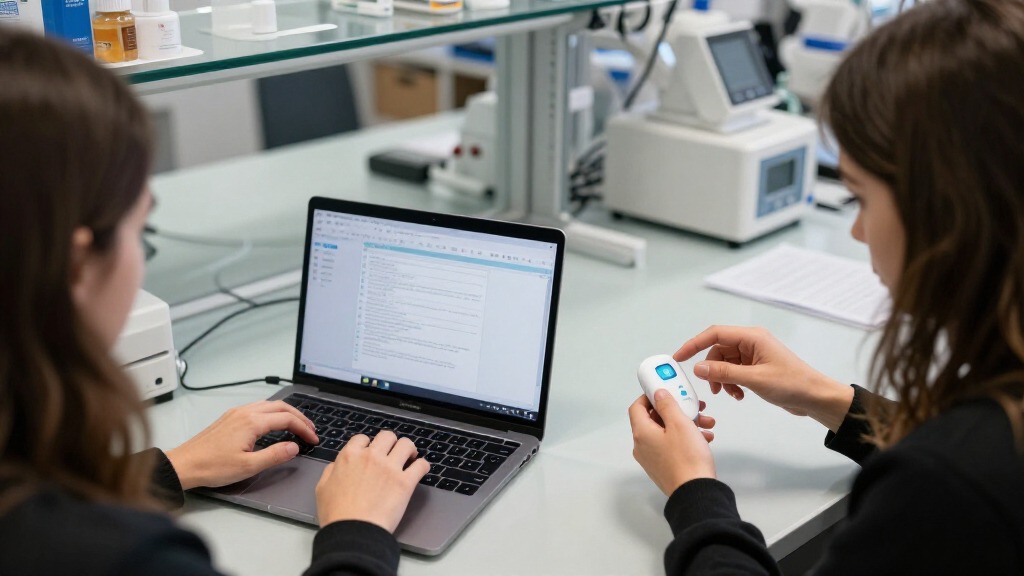
Five master’s students from Politecnico di Milano and Politecnico di Torino worked with Dermaself on image-processing methods for selfie-based skin analysis. The project combines image normalisation with a 3D face reconstruction approach designed to reduce identifying features while retaining skin texture; public details on testing, deployment and measured performance were not provided.
Five master’s students from Alta Scuola Politecnica have developed image-processing methods with beauty technology company Dermaself to address two challenges in selfie-based AI skin analysis: inconsistent photo conditions and the exposure of users’ identities. The work is designed to standardise images and alter facial geometry while retaining visible skin details, but the available report does not give performance results or a deployment date.
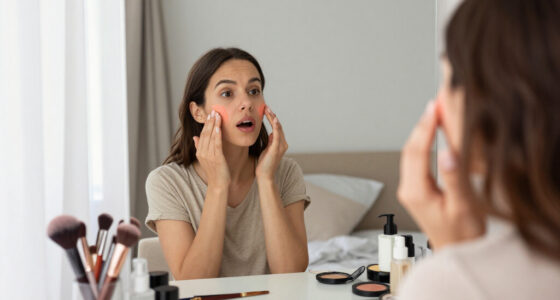
The project has two parts. The first aims to make images more comparable before they reach Dermaself’s AI analysis system. The software guides users toward suitable distance and lighting before taking a selfie, then applies a processing pipeline that combines AI-driven illumination correction with classical image-processing algorithms. The stated goal is to reduce variations caused by lighting and camera settings.
The second part targets privacy. Rather than relying on blurring or pixelation, the team developed a 3D facial reconstruction and anonymisation pipeline. According to the project description, it modifies the reconstructed face geometry to reduce biometric identifiers, then projects the original high-resolution skin texture onto the altered structure. The approach is intended to preserve details such as spots, redness, lesions and texture while making the person less recognisable.
The students were Andrea Germano, Adriano Giuliani and Federico Greppi from Politecnico di Torino, and Edoardo Gribaldo and Alessia Soccionovo from Politecnico di Milano. Their academic tutors were Professor Elisabetta Raguseo, director of Alta Scuola Politecnica, and Professor Federica Arrigoni. The team worked directly with Dermaself, whose system analyses visible skin characteristics and uses the results to generate product recommendations from a brand’s or retailer’s catalogue.
Privacy and Consistency in Skin Analysis
The work addresses a practical tension in AI skin analysis: the image must retain enough detail for software to assess visible characteristics, but a face can also reveal who the person is. Conventional anonymisation methods may obscure the very information the analysis needs. The proposed 3D approach is intended to separate those two functions, though the report describes its design rather than independently verified results.
Image conditions also matter for consumers and businesses using the technology in different places. A selfie taken at home may have different lighting and camera processing from one captured in a shop or at an event. Normalising such inputs could help make results more consistent across online and in-person settings. Whether it does so in practice depends on testing across devices, lighting conditions and users, details not supplied in the report.
For retailers and beauty brands, the project could be relevant because Dermaself connects skin-analysis outputs to products in a catalogue. Any system that processes facial images also raises questions about how images and derived information are handled. The methods described aim to reduce identity exposure, but they do not by themselves establish how data is stored, shared or deleted.
selfie lighting correction smartphone app
As an affiliate, we earn on qualifying purchases.
As an affiliate, we earn on qualifying purchases.
How the Dermaself Project Works
Dermaself’s technology takes a selfie, analyses visible skin characteristics and uses those results to produce personalised skincare recommendations from a participating company’s product catalogue. The report says the system can be integrated into e-commerce, beauty retail and brand-event experiences. Those uses may involve photos captured in varied environments, which is why input consistency is part of the project.
Camera exposure, white balance, built-in image processing and surrounding light can all change how skin appears in a photograph. Such differences can affect analysis of subtle visible features. The student project’s approach is to address variation both before capture, by guiding the user, and after capture, through image correction.
Privacy presents a separate technical problem. A face image contains both skin information and biometric features that can identify a person. Blurring, masking or pixelation may conceal identity but can also remove relevant skin detail. The team’s method instead changes a reconstructed facial geometry and retains the original skin texture, according to the project description.
“The objective is to provide Dermaself’s AI with more consistent images, regardless of where or how the selfie was taken.”
— Project description
privacy-preserving face reconstruction device
As an affiliate, we earn on qualifying purchases.
As an affiliate, we earn on qualifying purchases.
Testing and Deployment Details
The report does not state whether the methods have been evaluated in peer-reviewed research, tested with a defined number of users or compared against existing approaches. It also provides no accuracy, privacy-risk or image-quality measurements, so the degree to which the pipeline improves analysis or reduces identifiability cannot be assessed from the available information.
It is not clear whether the tools are already integrated into Dermaself’s commercial platform, being trialled, or remain at a development stage. The report also does not specify how images are stored or processed, what consent and retention practices apply, or whether the anonymised images are checked for residual identifying information. The stated goal of making a person less recognisable should not be read as a guarantee of anonymity.
As an affiliate, we earn on qualifying purchases.
Further Evidence and Rollout
The next useful milestones would be publication of testing results and clarification from Dermaself on whether and when the methods will enter its products. Evidence across different phones, lighting conditions and user groups could show whether image normalisation makes inputs more comparable without distorting relevant skin features.
For the privacy pipeline, readers will need information on how the method is validated against re-identification, how original and processed images are handled, and what protections apply during use. The available project account does not announce a launch schedule or identify a forthcoming trial, so the timing and scope of any commercial rollout remain unknown.
selfie standardization lighting tools
As an affiliate, we earn on qualifying purchases.
As an affiliate, we earn on qualifying purchases.
Key Questions
What did the Alta Scuola Politecnica students develop?
They developed two image-processing methods with Dermaself: one to guide and correct selfie conditions for more consistent AI analysis, and another using 3D facial reconstruction to reduce identifying features while retaining skin texture.
How is the face anonymised in the proposed method?
The system reconstructs a face in three dimensions, changes its geometry to reduce biometric identifiers, and re-projects the original high-resolution skin texture onto the modified structure, according to the project description.
Has the technology been proven to protect privacy or improve accuracy?
The report describes the method and its intended goals but provides no test results or performance measurements. Its effectiveness and privacy protections cannot be confirmed from the available information.
Is the technology available to consumers now?
The report does not say whether the tools have been integrated into Dermaself’s commercial system or provide a release date. Availability is unclear.
What does Dermaself do with skin-analysis results?
Dermaself’s system analyses visible skin characteristics from a selfie and uses the results to generate skincare recommendations from a participating brand’s or retailer’s product catalogue.
Source: rss
Halloween Picks
halloween
As an affiliate, we earn on qualifying purchases.