
TL;DR

Get self-care favorites delivered free — and shop member deals
- Fast, free delivery on millions of items
- Access to Prime Big Deal Days deals on October 6–7
- Prime Video, Amazon Music and more included
A Glamour UK first-person essay argues that maximalist nail art can express Black identity and pay tribute to Black women who shaped nail culture. It arrives amid a debate over minimalist “bare” nails, after the BBC removed an article that connected the look to white supremacist beauty standards. The essay also acknowledges that elaborate manicures can demand significant time and money.
Glamour UK has published a first-person essay arguing that the writer’s maximalist manicures are a form of self-expression and a tribute to Black women, amid a debate over the popularity of bare, minimalist nails. The discussion intensified after the BBC removed an article suggesting that the bare-nails trend could “perpetuate white supremacist standards of beauty,” according to the source report.
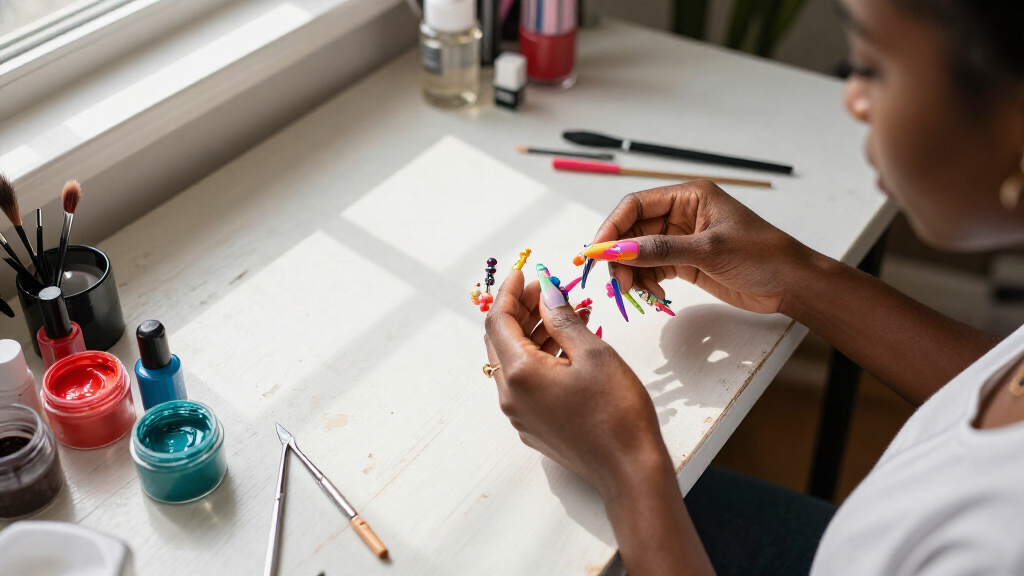
The writer describes moving from simple square acrylics with white tips to long, decorative sets featuring 3D details, chrome and gems. She says her nails are part of her identity and connect her with other people, including relatives and strangers who stop to ask about the designs. She frames the manicures as a way to honour Black women and the cultural history behind nail art.
The essay places that personal account alongside a wider argument about whose tastes are treated as fashionable. It says nail art has deep roots in Black, Latina and Asian communities, whose creativity helped shape contemporary nail culture. Beauty journalist Kristin Rodulfo told the BBC that the bare aesthetic “really promotes blankness and this kind of sameness and erasure of culture and identity that is so important to black and brown communities,” as quoted in the Glamour report.
The piece also presents a competing view: some women welcome simpler nails as a break from beauty routines that can be costly and time-consuming. The writer says she would not blame anyone for choosing not to spend as much time or money at a salon. Nail artist Lottie, who works under the Instagram name moodienails.lnd, describes creating client-specific sets from personal references such as patterns, music and fashion.
Nail Art as Cultural Expression
The disagreement is about more than which manicure is in style. It touches on how beauty norms are described and whose forms of self-expression are treated as polished, fashionable or excessive. The essay argues that calling restrained nails “elegant” or “tasteful” can carry cultural implications when elaborate styles have long been associated with communities of colour.
At the same time, the source does not establish that choosing bare nails is inherently political or that everyone who prefers minimalism shares the same motivations. The writer’s account makes room for both the cultural meaning of nail art and the practical burden of maintaining elaborate manicures. That tension matters to readers because beauty trends can involve identity, personal preference, expense and social expectations at once.
Black-inspired maximalist nail art kits
As an affiliate, we earn on qualifying purchases.
As an affiliate, we earn on qualifying purchases.
From Bare Nails to the BBC Debate
The Glamour report says short nails and understated treatments—including Japanese manicures and products or looks described as BB cream and rosehip oil nails—have been prominent in feeds and salons. The BBC article’s removal brought renewed attention to whether this “barely there” style should be understood simply as a trend or also examined through the history and cultural associations of nail art.
Glamour’s writer asked Tinu Bello, a senior Mylee ambassador, whether maximalist designs were returning. Bello said, “Maximalism in beauty is having a real main character moment,” describing a desire for expressive styles after years of neutral nails. She advised people trying the look to use a consistent colour palette or repeat a design element, and said negative space can keep a detailed manicure visually balanced.
The article is a personal essay with comments from beauty professionals, not a survey of salon customers or a formal study of changing preferences. It documents one writer’s experience and reports views from named contributors; it does not establish how widely either minimalist or maximalist nails are currently preferred.
““Maximalism in beauty is having a real main character moment.””
— Tinu Bello, senior Mylee ambassador
3D nail art decorations for acrylic nails
As an affiliate, we earn on qualifying purchases.
As an affiliate, we earn on qualifying purchases.
The Reach of the Trend Debate
The source does not provide sales figures, salon data or polling to show whether minimalist nails are declining or maximalist designs are gaining popularity. Bello’s assessment is an industry perspective, while the writer’s experience reflects her own tastes and social circles.
The report also does not give the BBC’s explanation for removing its article, when the removal occurred, or whether the BBC plans to publish a replacement. It does not establish that bare nails themselves promote racist standards; that language appears in the removed article’s suggestion and in the debate described by Glamour. The reasons individuals choose particular manicures remain varied and are not settled by the essay.
As an affiliate, we earn on qualifying purchases.
Whether Bold Manicures Spread
The immediate question is whether the attention around the BBC article and the Glamour essay will be followed by measurable changes in nail trends. The source reports no announced industry data or upcoming policy decision. Readers can expect the discussion to continue through personal accounts from nail artists, beauty writers and customers, but any claim of a broad shift would need evidence beyond social-media impressions or individual observations.
For now, the essay’s contribution is a personal argument: maximalist nails can hold cultural meaning as well as aesthetic appeal, while simpler styles may suit people seeking a less demanding routine. Neither preference, on the evidence provided, speaks for all Black women or all beauty consumers.
As an affiliate, we earn on qualifying purchases.
Key Questions
What is the Glamour UK article about?
It is a first-person essay in which the writer describes maximalist nail art as self-expression and a tribute to Black women, while discussing a broader argument over minimalist beauty trends.
Why did bare nails become part of a public debate?
The source says the debate drew attention after the BBC removed an article suggesting that bare nails could perpetuate white supremacist beauty standards. The removal and the suggestion prompted discussion about beauty norms and cultural history.
Does the report show that maximalist nails are becoming more popular?
No. Tinu Bello says maximalism is attracting renewed interest, but the report gives no market figures or polling to confirm a wider shift in customer preferences.
Does the writer criticize people who prefer simple nails?
No. The writer says elaborate manicures can require substantial time and money and says she would not blame anyone for choosing a lower-maintenance style.
Source: rss
Fall Picks
fall essentials
As an affiliate, we earn on qualifying purchases.